
Shoulder Pain After Padel: Common Causes and Treatment Options
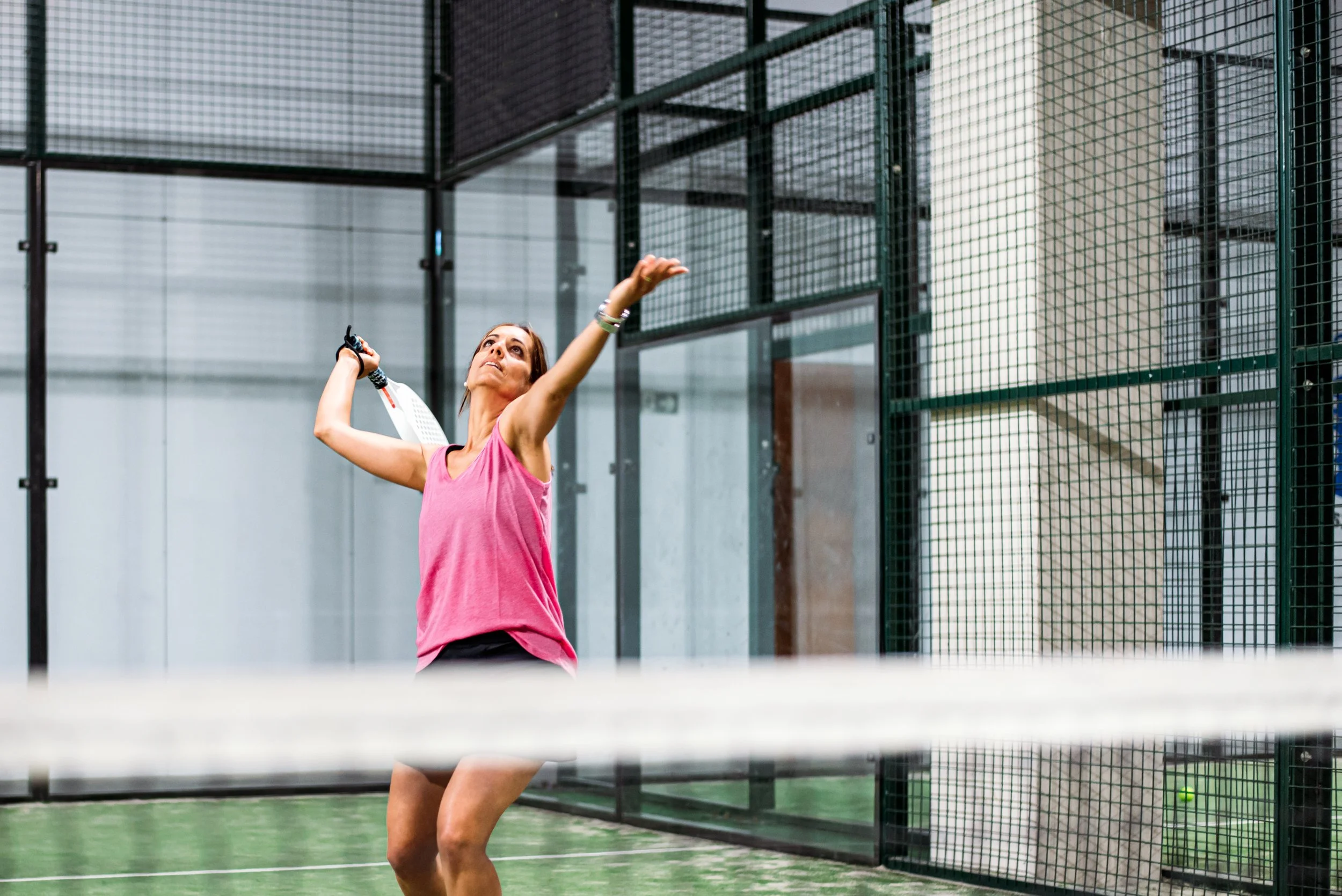
The bandeja is the shot that makes padel feel like padel. It is also the shot that fills physiotherapy clinics.
If your shoulder aches the morning after a session, or you have started avoiding overheads because reaching up feels wrong, you are in familiar company. Shoulder pain from padel is one of the most frequent complaints we hear from players, and research backs that up: across studies of amateur players, the shoulder ranks as the second most injured upper body region, behind only padel elbow.
The good news is that most shoulder problems in padel are load problems rather than damage problems. They respond well to the right treatment. Here is what causes them and what to do.
Why padel loads the shoulder so heavily
Padel looks gentle from the sidelines. The serve is underarm, the court is small, and nobody is hitting 200km/h flat serves. So why does the shoulder complain?
Volume is the first answer. Because the walls keep the ball in play, rallies run long and stroke counts pile up. A two hour social session might involve several hundred shots, and a decent chunk of those are overhead.
Position is the second answer. The bandeja, the vibora and the smash all put your arm above shoulder height with the elbow behind the line of your body. That position puts the rotator cuff and the surrounding tissue under real compression and stretch at the same time. Repeat it a few hundred times and the tissue needs recovery time it does not always get.
Technique is the third. A motion analysis study comparing professional and amateur padel players found meaningful differences in shoulder mechanics during strokes. Experience changes how the joint is loaded. Amateurs tend to generate power from the arm alone, while stronger players drive the shot through the legs and trunk and let the arm follow.
That is the crux of it. If your legs are not contributing, your shoulder is paying.
Common causes of shoulder pain from padel
Rotator cuff overload
This is the most common one by a distance. The rotator cuff is a group of four muscles that keep the ball of the shoulder centred while the bigger muscles move the arm. Overhead shots ask a lot of them.
When demand outpaces capacity, the tendons become sensitive. You feel it as an ache on the outside of the upper arm, pain when reaching overhead or behind your back, and weakness that shows up as shots losing pace before they start hurting.
Subacromial pain and bursitis
Research on non-professional padel players identified subacromial and subdeltoid bursitis as one of the most common upper limb findings. The bursa is a small fluid-filled cushion that reduces friction under the bony roof of the shoulder. Squeeze it repeatedly and it becomes irritated and swollen, which leaves less room and creates a painful cycle.
Typical sign: a sharp catch somewhere in the middle of the range when you lift your arm out to the side, which eases once you get past it.
Poor scapular control
Your shoulder blade is the platform your arm works from. If it does not rotate upwards properly as you reach overhead, the space available for your tendons shrinks.
This is where the desk job comes in. Sitting for 40 hours a week leaves many Singapore players with stiff upper backs and sleepy shoulder blade muscles. Then Saturday arrives and you ask that system to hit 200 bandejas.
Stiffness in the wrong places, mobility in others
Overhead athletes commonly lose internal rotation on the playing side while gaining external rotation. A stiff mid-back forces the shoulder to find range it does not have. In both cases the joint compensates, and the tissue that compensates is the tissue that gets sore.
Fatigue and simply playing too much
Injury risk in padel rises with playing hours and years of experience, a pattern that shows up across the most common padel injuries. Many players go from one session a week to four in a couple of months because they finally got into a good group chat. Tissue adapts more slowly than enthusiasm does.
Symptoms worth paying attention to
Some shoulder soreness after an intense session is normal. These signs are not:
Pain that lasts more than 48 hours after playing
Difficulty sleeping on the affected side
Pain reaching behind your back or into a seatbelt
Weakness lifting light objects overhead
Clicking or catching combined with pain
Shots losing power without you changing anything
Get assessed promptly if you had a sudden pop or tearing sensation, if you cannot lift the arm at all, or if you notice pins and needles down the arm. Those need a different conversation.
Treatment options for shoulder pain from padel
Assessment first
Shoulder pain from padel can come from the rotator cuff, the bursa, the joint itself, the shoulder blade mechanics, or the neck. These feel similar to the person experiencing them and need quite different treatment.
A shoulder physiotherapy assessment looks at your range of motion, strength through specific angles, scapular movement, thoracic mobility and neck involvement. Scans are rarely needed early, largely because imaging findings in shoulders are common in people with no pain at all.
Settling things down
Early treatment aims to reduce irritation while keeping the shoulder moving. That might include manual therapy, targeted soft tissue work, taping to support the shoulder blade, and adjusting your playing load rather than stopping entirely.
Cutting from four sessions to two, avoiding the smash for a fortnight and letting more lobs bounce off the glass will often do more than complete rest.
Building strength that lasts
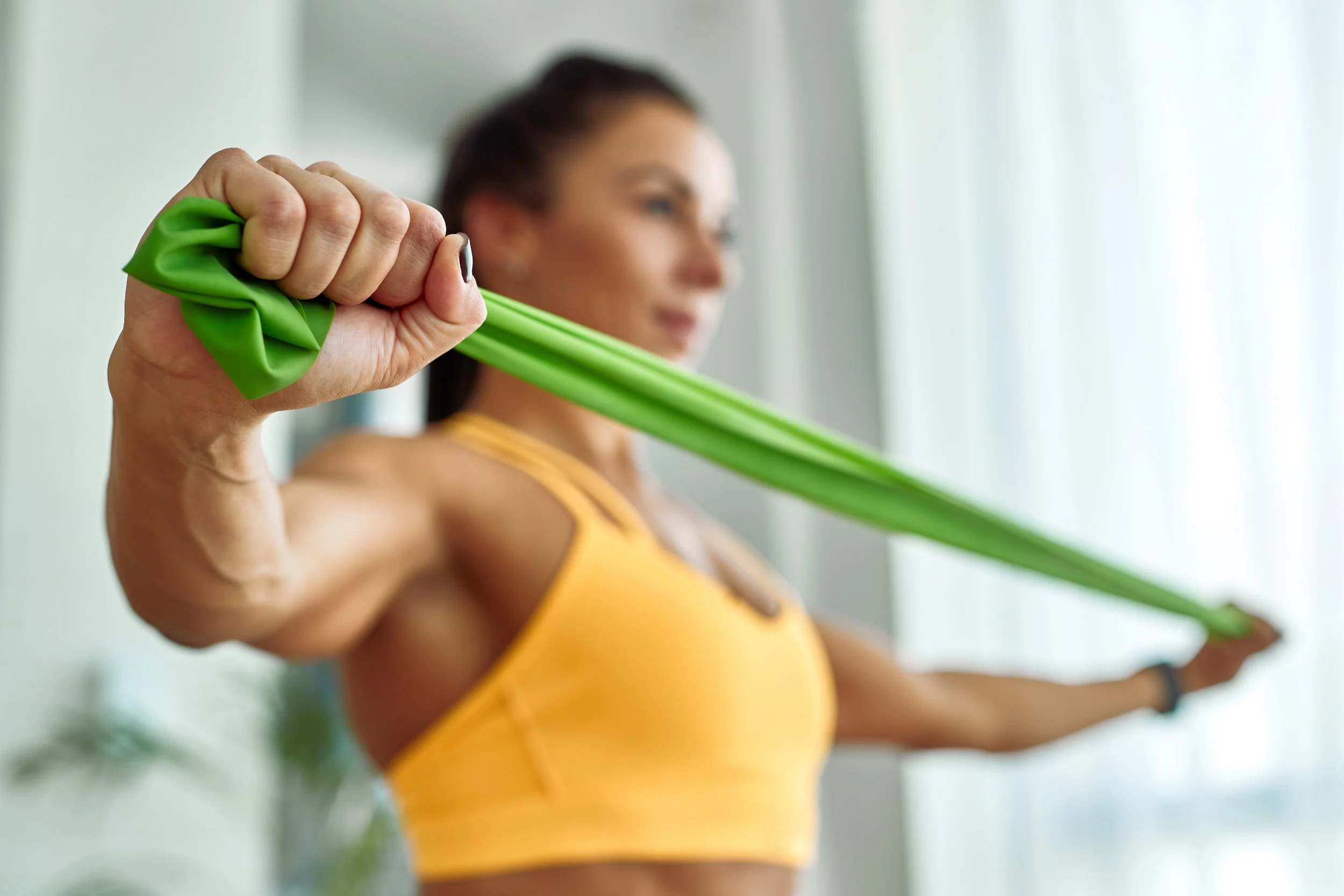
Rehabilitation is the part that actually resolves the problem. It typically works through rotator cuff strengthening in progressively more demanding positions, scapular control work, and mid-back mobility.
From there the programme moves overhead, then adds speed, then adds the specific demands of the bandeja and the smash. Strength and control need to hold up when you are tired, because that is when injuries happen.
Fixing the technique behind it
A coach can help you drive the bandeja through your legs and rotate through the trunk rather than reaching and slapping with the arm. This is not a cosmetic change. It redistributes the workload away from a shoulder that is already at its limit.
Equipment matters too. Heavier rackets have been linked to higher injury rates, and a paddle that is too heavy or too head-heavy makes every overhead harder work.
When to consider other options
Most players do not need anything beyond good rehabilitation. If pain persists despite a well-run programme, your physiotherapist can coordinate with a sports doctor about imaging or a corticosteroid injection. An injection can create a window of reduced pain, but it works best alongside strengthening rather than instead of it.
Getting back on court
Recovery timelines vary. Mild rotator cuff irritation caught early often settles within four to eight weeks. Longstanding shoulder pain from padel, particularly with real strength deficits, usually needs three months or more of consistent work.
Return to play should be staged. Ground strokes before overheads. Drills before matches. One match before a full weekend.
Shoulder pain from padel is common, but it is not something you have to accept as the price of playing. If your shoulder has been complaining for more than a couple of weeks, book an appointment with our physiotherapists at iPhysio and we will work out what is driving it.
References
Musculoskeletal disorders in padel: from biomechanics to sonography. https://pmc.ncbi.nlm.nih.gov/articles/PMC11178742/
Risk of injury and kinematic assessment of the shoulder biomechanics during strokes in padel players: a cross-sectional study. https://pubmed.ncbi.nlm.nih.gov/37955931/
Injuries and overuse injuries in padel tennis: a retrospective epidemiological cross-sectional study of a level 1 trauma center in Germany. https://pubmed.ncbi.nlm.nih.gov/40677135/
Analysis of Differences in Injuries in Padel Players According to Sport-Specific Factors, Level of Physical Activity, Adherence to the Mediterranean Diet, and Psychological Status. https://pubmed.ncbi.nlm.nih.gov/40711113/
Prevalence and injury profiles for recreational padel players: A cross-sectional survey-based study. https://www.sciencedirect.com/science/article/abs/pii/S1466853X25000926