
Padel Elbow: Causes, Symptoms and Physiotherapy Treatment
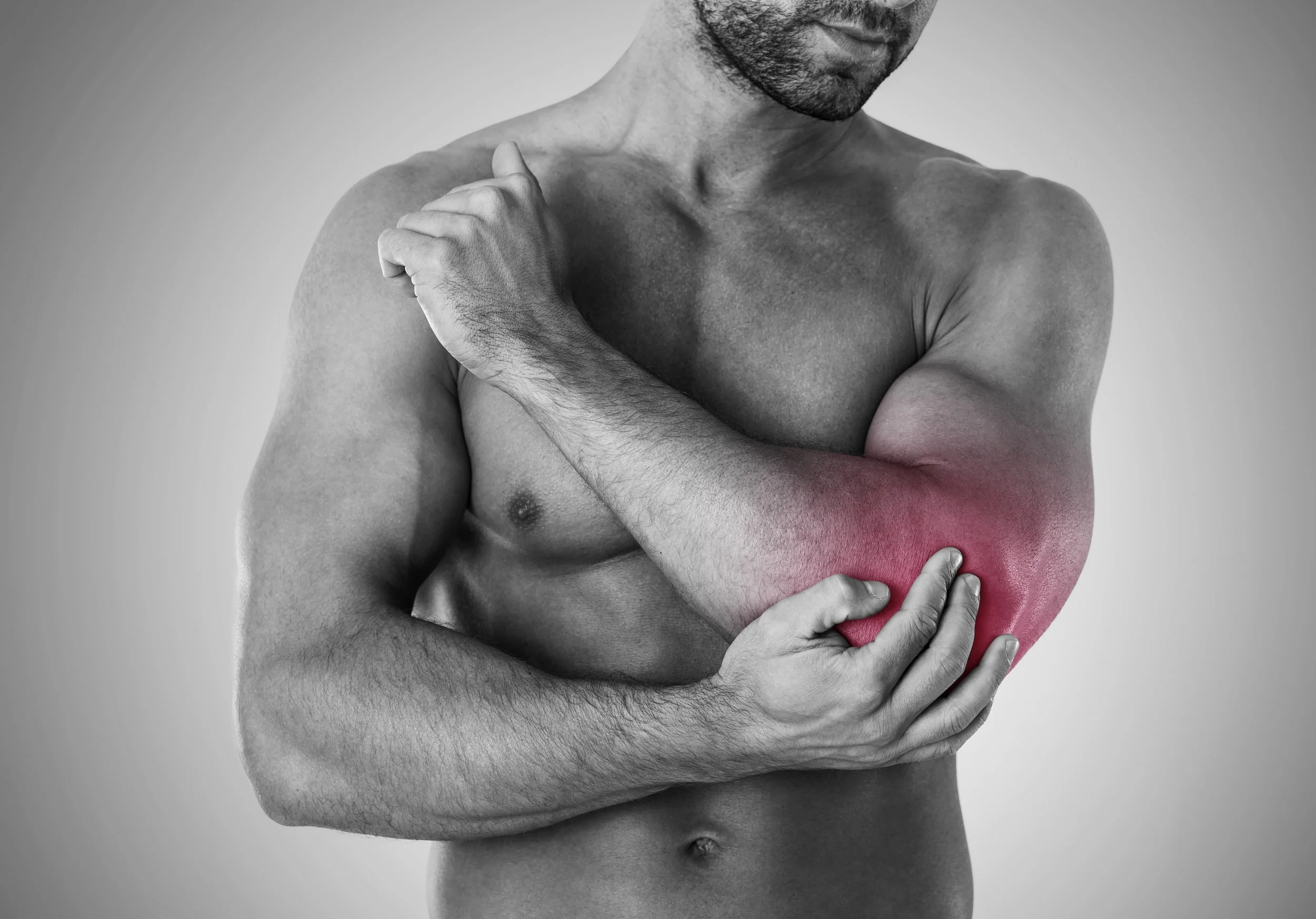
It starts small. A twinge on the outside of your elbow when you shake someone's hand after a match. A dull ache when you lift your coffee. Nothing bad enough to skip your Thursday game.
Six weeks later you cannot open a jar, and your backhand has quietly disappeared.
That is padel elbow, and it is the most common overuse problem in the sport. Reviews of the padel research keep landing on the same conclusion: the elbow is the single most injured body part in padel, and tendon problems account for somewhere between 44 and 49 percent of all injuries recorded. Here is what is going on inside your arm, and what can be done about it.
What is padel elbow?
Padel elbow is the everyday name for lateral epicondylalgia, which you may know better as tennis elbow. The tendon that takes the beating is the extensor carpi radialis brevis, or ECRB. It runs from the muscles on the top of your forearm down to a small bony bump on the outside of your elbow.
The job of that muscle is to hold your wrist steady. Every time you strike a ball, your wrist wants to collapse backwards on impact. The extensors fire hard to stop that from happening.
For a long time people called this condition tennis elbow "inflammation". The tissue research says otherwise. What you actually find is degeneration: micro-tearing in the tendon fibres, a healing process that has stalled, and disorganised tissue that is weaker than it should be. That distinction matters, because it changes the treatment completely. You cannot rest a stalled healing process back to health. You have to load it.
What causes padel elbow?
Sheer volume of strokes
Padel rallies last longer than tennis rallies because the glass keeps the ball alive. More strokes per hour means more repetitions through the same tendon. A study of 216 players found injury rates climbed with more weekly hours and more years of experience, which is not the pattern people expect.
The backhand and repeated ball striking
The forearm extensor muscles help stabilise the wrist every time you strike the ball. If the wrist is poorly controlled at contact, particularly during repeated backhand strokes, the extensor tendon may be exposed to greater load.
Combined with the high number of strokes that can occur during padel rallies, this repeated loading may contribute to lateral elbow symptoms over time.
That also flows much better from the preceding section on sheer volume of strokes, without trying to make the glass itself a risk factor.
Repeated varus stress and tendon friction
The specific mechanics of padel strokes create repeated sideways stress at the elbow. The ECRB tendon also rubs against the bony edge of the capitellum during these movements. Over months, that friction contributes to the tissue breakdown.
Coming to padel with no racket sport background
This one is striking. In a German study of 234 padel players, those who did not play any other rebound sport injured their elbow significantly more often than those who did. Your forearm needs a base level of conditioning that most new players simply have not built yet.
Your racket and your grip
Equipment is not a small detail. Heavier rackets, particularly in the 350 to 370 gram range, have been linked to higher rates of muscle and ligament injury. Grip size and the number of overgrips you stack on also change how hard your forearm has to squeeze to control the paddle.
A grip that is too small forces you to grip tighter. Tighter gripping means more extensor work on every single shot.
Symptoms of padel elbow you should not ignore
Most players know the main one: pain on the bony point outside the elbow. But the condition has a fuller picture.
Watch for these:
Pain that spreads down the top of your forearm
Weak or painful grip, especially first thing in the morning
Difficulty with everyday tasks like pouring a kettle, turning a doorknob or lifting a mug
Tenderness when you press just below the bony bump
Pain when you straighten your arm fully
An ache that eases during the warm-up but flares up hours after you finish
That last symptom is the one people misread. Tendons often feel better once they are warm. Feeling fine mid-match does not mean the tendon is fine.
Two signs deserve a faster response. Pain that travels into your hand with pins and needles could involve a nerve rather than the tendon. Pain on the inside of the elbow instead is a different problem, sometimes called golfer's elbow, and it needs a different plan.
Left alone, this condition is stubborn. Roughly one in five cases of lateral elbow pain lasts more than a year.
How physiotherapy treats padel elbow
Step one: confirm it is actually the tendon
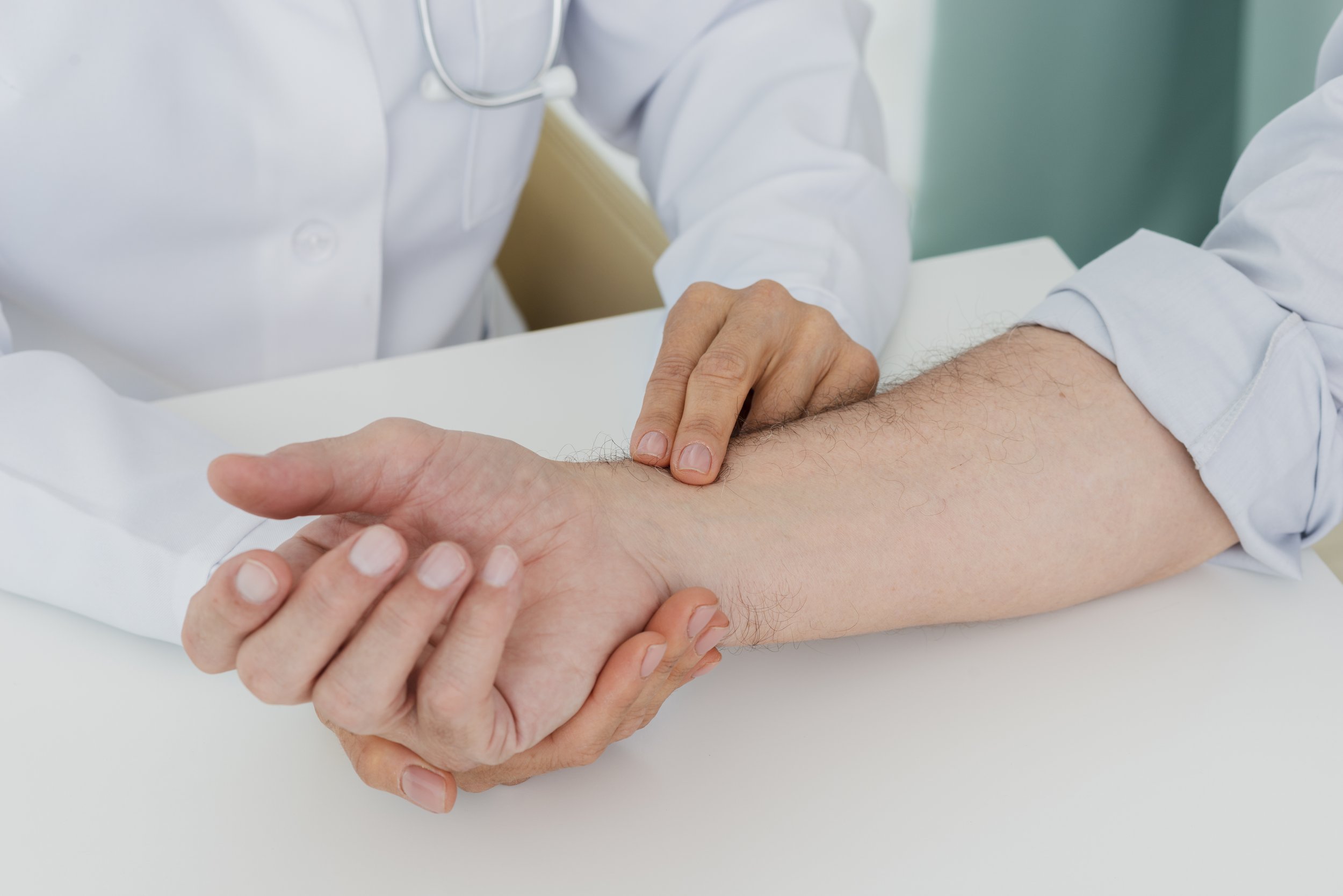
Elbow pain is not always tendon pain. The neck can refer pain into the forearm. The radial nerve can become irritated where it passes through the forearm muscles. The elbow joint itself can be the source, particularly in players over 50.
During an elbow pain assessment your physiotherapist tests grip strength, resisted wrist and finger extension, neck movement and nerve mobility before settling on a diagnosis. Treating the wrong structure is the most common reason padel elbow drags on for months.
Step two: calm the tendon down
The early aim is to reduce irritation without shutting the arm down completely. That usually involves adjusting how much you play rather than stopping altogether, plus hands-on treatment, soft tissue work through the forearm, and sometimes a counterforce brace or taping to offload the tendon during daily tasks.
Isometric holds are useful here. Holding a light contraction for 30 to 45 seconds often reduces pain immediately and starts loading the tissue at the same time.
Step three: rebuild the tendon with progressive loading
This is the core of treatment for padel elbow, and there is no shortcut. Tendons respond to gradually increasing load over weeks and months.
Your programme will typically move through slow, controlled wrist extension work, then grip strengthening, then faster and heavier loading that starts to look like the demands of a real match. Progress is measured, not guessed. If your grip strength is still 30 percent down on the other side, you are not ready for competitive play.
Shockwave therapy for persistent cases
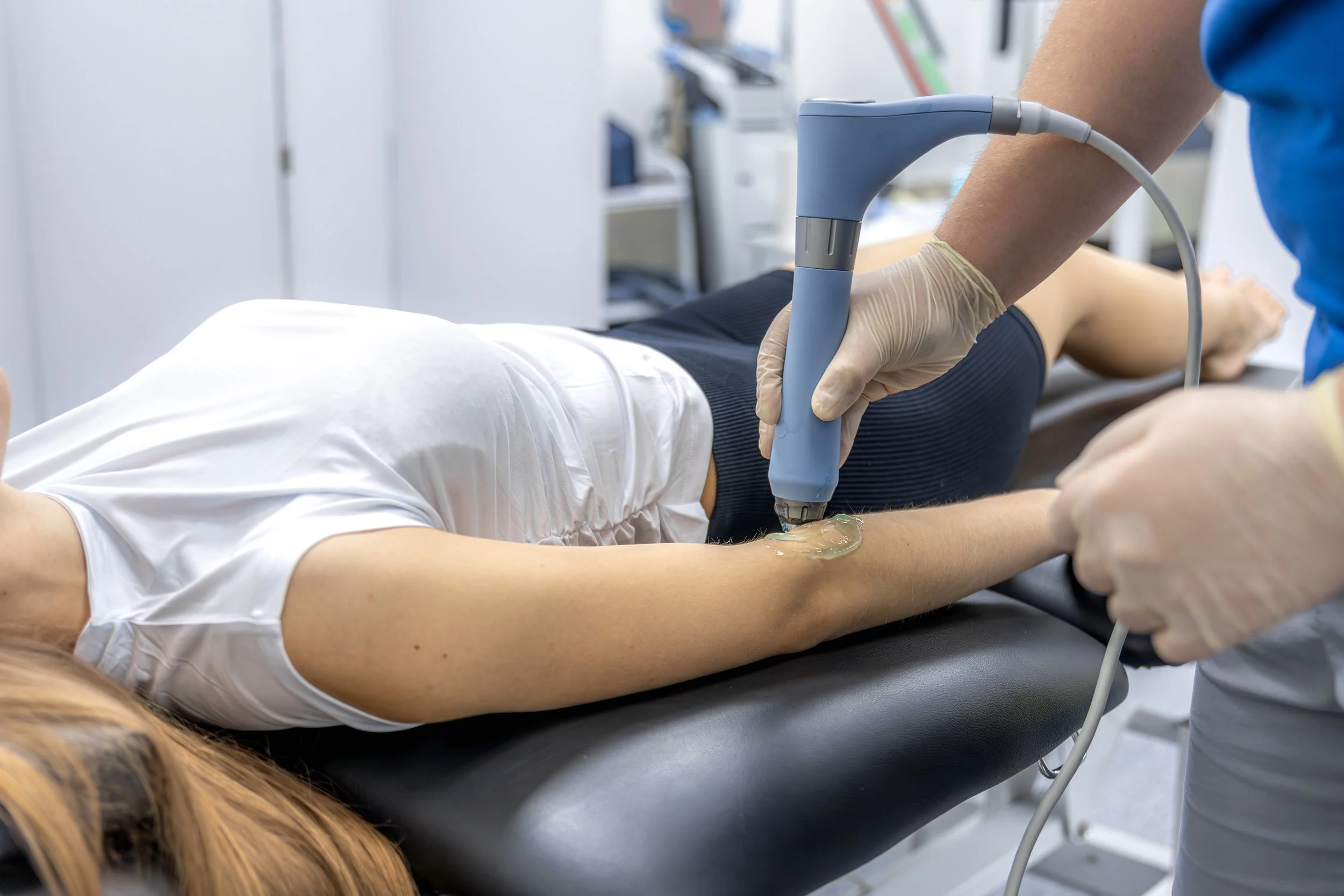
For padel elbow that has become persistent or has not responded as expected to rehabilitation alone, Shockwave Therapy (ESWT) may also be considered as part of the treatment plan.
Shockwave Therapy is a non-invasive treatment that delivers acoustic waves to the affected tissue. Research suggests it may help reduce pain and improve function in chronic lateral elbow tendinopathy. At Integrative Physio, shockwave therapy can be used alongside progressive strengthening and rehabilitation rather than as a replacement for exercise.
Learn more about Shockwave Therapy at Integrative Physio
Step four: fix the chain above the elbow
The elbow rarely works alone. Weak shoulder and scapular muscles force the forearm to do more of the stabilising work, which is also why some players end up dealing with shoulder pain from padel a few months later. A good rehab plan includes shoulder strength, thoracic mobility and core control, not just forearm exercises.
Step five: change the input
Technique coaching to keep the wrist stable on the backhand. A review of your racket weight and balance. Grip size measured properly. Fewer overgrips if you have stacked three on. These changes are what stop the problem coming back after rehab ends.
How long does recovery take?
Be realistic. Mild padel elbow caught early often settles within six to eight weeks. Cases that have been ignored for six months or more can take three to six months of consistent loading.
The good news is that you can usually keep playing in some form throughout, at reduced volume and with adjusted technique. Full rest tends to make tendons weaker and the eventual return harder.
For tendon pain that has been stubborn for months, shockwave therapy is sometimes added alongside the strengthening programme to help kickstart a healing response.
Do not wait it out
The players who recover fastest are the ones who came in when the pain was still an annoyance rather than a problem. Padel elbow does not usually resolve on its own, because the thing causing it is the thing you enjoy doing.
If your elbow has been talking to you for more than a couple of weeks, book an assessment with our physiotherapists at iPhysio. We will find the real driver and build a loading plan that fits around your court time.
References
Musculoskeletal disorders in padel: from biomechanics to sonography. https://pmc.ncbi.nlm.nih.gov/articles/PMC11178742/
Injuries and overuse injuries in padel tennis: a retrospective epidemiological cross-sectional study of a level 1 trauma center in Germany. https://pubmed.ncbi.nlm.nih.gov/40677135/
The Burden of Injuries in Padel: A Systematic Synthesis of Risk Factors and Biomechanical Implications. https://www.researchgate.net/publication/408540383
Analysis of Differences in Injuries in Padel Players According to Sport-Specific Factors, Level of Physical Activity, Adherence to the Mediterranean Diet, and Psychological Status. https://pubmed.ncbi.nlm.nih.gov/40711113/
Prevalence and injury profiles for recreational padel players: A cross-sectional survey-based study. https://www.sciencedirect.com/science/article/abs/pii/S1466853X25000926
Musculoskeletal disorders in padel: from biomechanics to sonography https://pmc.ncbi.nlm.nih.gov/articles/PMC11178742/