
Most Common Padel Injuries and How Physiotherapy Can Help
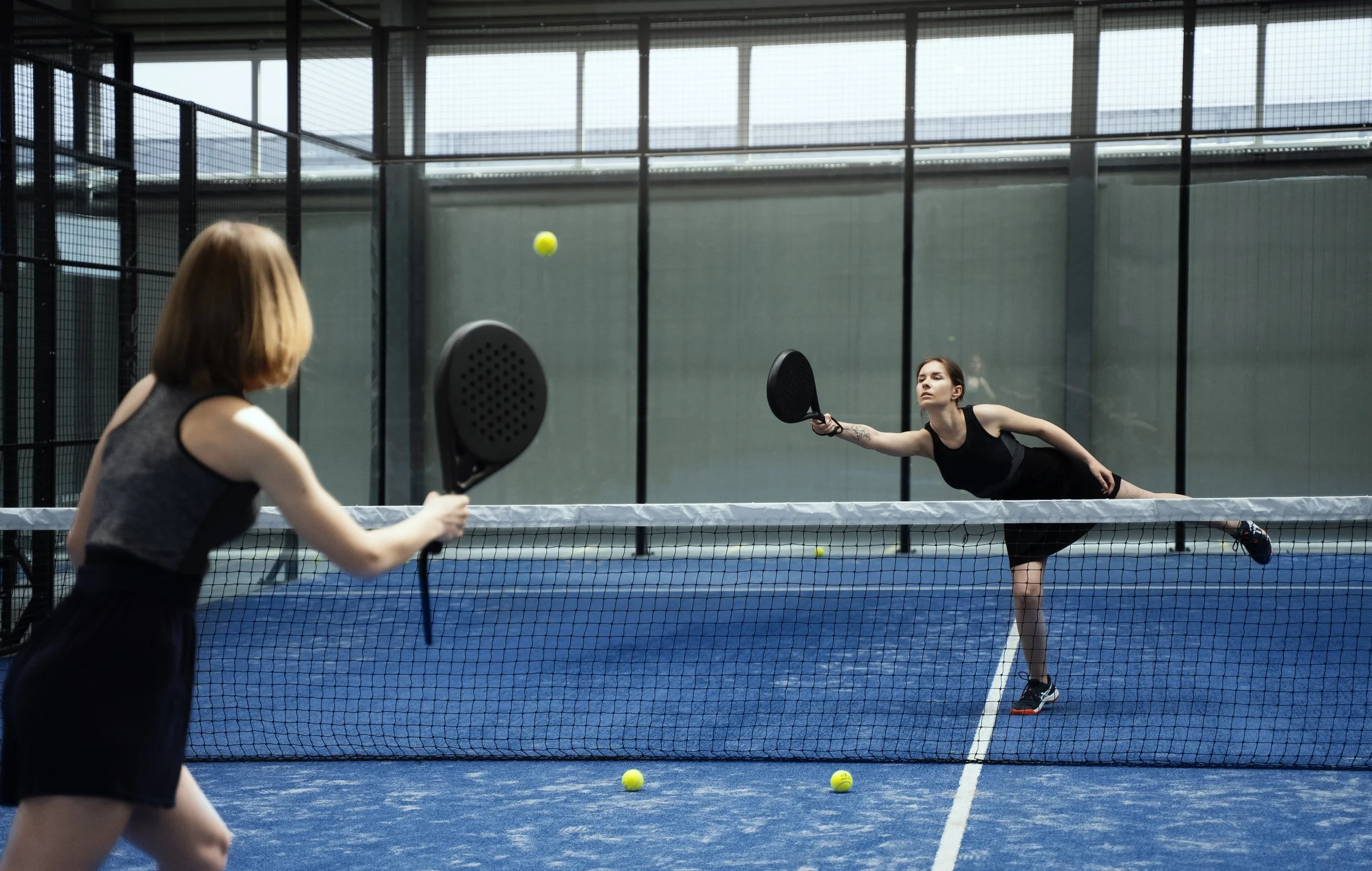
Padel has taken over Singapore faster than almost any sport in recent memory. We went from a single court to a booking app that sells out at 7pm on a Tuesday. Rooftops, industrial parks, Sentosa, the Expo halls. If you play, you already know how hard it is to get a court.
You have probably also noticed something else. Everyone seems to be nursing something. A sore elbow, a shoulder that clicks, a calf that went pop mid-rally. The most common padel injuries are not dramatic, and that is exactly why players ignore them until they cannot play at all.
So here is what actually goes wrong, why it happens, and what a physiotherapist can do about it.
Why padel is harder on the body than it looks
The sport sells itself as easy. Underarm serve, small court, short paddle, glass walls that keep the ball alive. Low impact, low barrier, low risk. That is the pitch.
The reality is a bit different. Rallies last longer than in tennis because the walls keep the ball in play. That means more strokes per hour, more direction changes in a tiny space, and more repetitions through the same joints.
Then there is the shape of the movement itself. You crouch low for balls off the back glass. You reach overhead for bandejas and smashes. You lunge sideways, stop, and push off again within a second or two. Add Singapore's humidity to a two hour social session and fatigue creeps in long before your ego lets you stop.
Researchers have measured this. One review put the injury rate at roughly three per 1000 hours of training and eight per 1000 matches, which sits comfortably alongside tennis and squash rather than below them. Padel is not a gentler sport. It is just a friendlier looking one.
The most common padel injuries we see in clinic
Elbow pain, better known as padel elbow
The elbow is the single most frequently injured site in the sport. Reviews of the padel literature consistently identify it as the number one problem area, and tendon injuries make up close to half of all reported injuries.
What is happening is an overload of the common extensor tendon where it attaches to the outside of your elbow. Every backhand, every block off the glass, every mishit near the frame sends a jolt through the forearm muscles that stabilise your wrist. Do that a few thousand times a month and the tendon starts to complain.
Interestingly, a German study of 234 padel players found that people who play no other rebound sport injure their elbow significantly more often than those who do. Coming to padel cold, with no racket sport background, seems to leave the forearm underprepared.
Shoulder pain
The shoulder is the second most common upper body complaint after the elbow. Bandejas, viboras and smashes all ask the shoulder to work overhead, at speed, with the arm behind the body. Rotator cuff irritation and subacromial pain show up regularly, especially in players who sit at a desk all week and then hit 300 overheads on Saturday.
Knee problems
Here is a stat that surprises people. In that same German study, non-professional players injured their knee more often than any other region, at just under 20 percent of all injuries. Meanwhile, professionals injured the lower leg and foot most.
Recreational players tend to stop, twist and land with less control. The knee absorbs whatever the hip and ankle do not.
Ankle sprains
Quick lateral pushes off a slightly gritty court surface are a reliable recipe for a rolled ankle. Ankle injuries also have a habit of coming back, and repeated sprains can leave you with chronic ankle instability. Roughly two thirds of ankle and foot injuries in padel players start suddenly, which tells you they are acute rather than gradual.
Calf strains
Ask any padel group chat about "tennis leg" and someone will have a story. The calf tears when you push backwards off the front foot, usually to chase a lob you should have let bounce off the glass. It is more common in players over 35, and it happens without warning.
Lower back pain
The bandeja loads your back in extension and rotation at the same time. Repeat that pattern for a couple of hours and a stiff, achy lower back is a fair outcome. Younger players in particular report back pain more often than older ones.
What the numbers actually say
A survey of 457 recreational padel players found that 36.5 percent had sustained an injury in the previous year, at a rate of 2.81 injuries per 1000 hours of play. More than half of those injuries were in the lower limb.
The part that matters most to you is the recovery time. The median was 30 days, with plenty of players sidelined for two months. That is a lot of missed sessions for something that started as a niggle.
Another study of 216 players found that injuries went up with more playing experience, more hours on court, and a higher competitive level. In other words, the fitter and keener you get, the more you need to manage your load rather than assume you have earned immunity.
How physiotherapy can help
Working out what is actually wrong
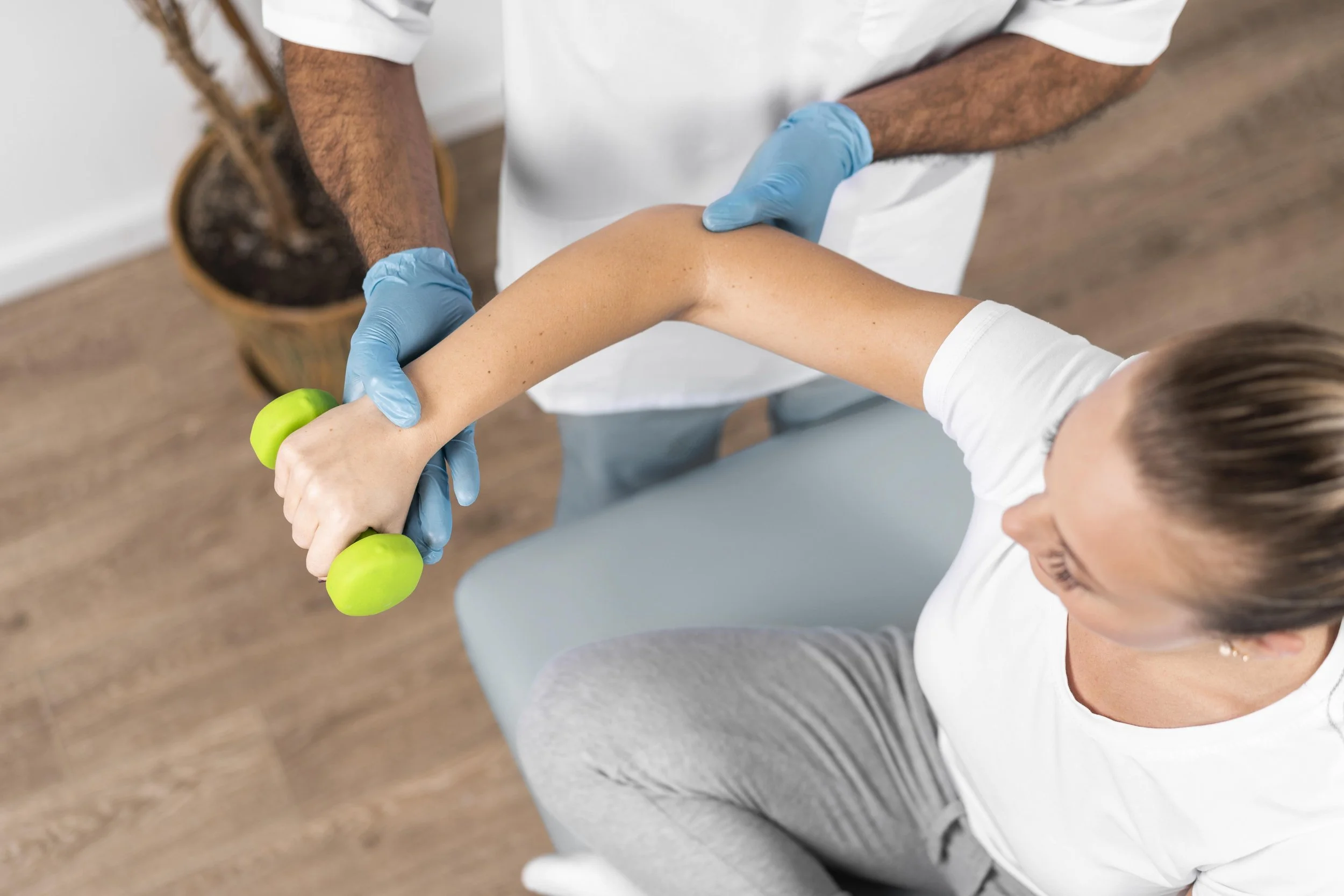
Elbow pain is not always the tendon. Shoulder pain is often a neck problem in disguise. A proper sports physiotherapy assessment looks at how you move, where your strength drops off, and what your body does under fatigue, not just where it hurts when you press on it.
Getting pain under control
Early on, the goal is simple. Reduce the irritation enough that you can start loading the area again. Hands-on treatment, taping, activity modification and specific exercise all help here. Complete rest usually is not the answer, because tendons and muscles get weaker when you leave them alone.
Rebuilding strength where it counts
This is the part that decides whether the problem comes back. Grip and forearm strength for the elbow. Rotator cuff and scapular control for the shoulder. Calf capacity, hip strength and single leg control for the lower limb. Progressive loading over weeks, not days.
Changing what caused it
Technique matters. So does your gear. Research has linked heavier rackets in the 350 to 370 gram range to muscle and ligament injuries, and shoe outsole patterns to injury severity. A physio can look at your grip size, racket weight, footwear and stroke mechanics alongside your body.
Getting you back on court properly
Returning to padel is not a single decision. It is a graded process: hitting before running, drills before matches, one match before three. We build that plan around your season, your league and your court bookings.
When should you see a physiotherapist?
Book an assessment if any of these sound familiar:
Pain that has hung around for more than two weeks
A niggle that warms up during play but hurts more the next morning
Any injury with swelling, giving way or an audible pop
Pain that is changing your technique or making you avoid certain shots
The same problem returning every few months
That last one is the big one. Recurrence is the clearest sign that the original cause was never addressed.
Play more, not less
None of this is an argument against padel. The sport is excellent for your heart, your reaction time and your social life, and the injury profile is no worse than other racket sports. The players who last are the ones who treat their body as part of their kit. They warm up properly, build strength off court, and deal with small problems while they are still small.
Understanding the most common padel injuries is the first step. Doing something about yours is the second. If something has been bothering you for a while, book an appointment with our physiotherapists at iPhysio and we will build a plan that keeps you playing.
References
Prevalence and injury profiles for recreational padel players: A cross-sectional survey-based study. https://pubmed.ncbi.nlm.nih.gov/40644841/
Injuries and overuse injuries in padel tennis: a retrospective epidemiological cross-sectional study of a level 1 trauma center in Germany. https://pubmed.ncbi.nlm.nih.gov/40677135/
The Burden of Injuries in Padel: A Systematic Synthesis of Risk Factors and Biomechanical Implications. https://www.researchgate.net/publication/408540383
Analysis of Differences in Injuries in Padel Players According to Sport-Specific Factors, Level of Physical Activity, Adherence to the Mediterranean Diet, and Psychological Status. https://pubmed.ncbi.nlm.nih.gov/40711113/
Musculoskeletal disorders in padel: from biomechanics to sonography. https://pmc.ncbi.nlm.nih.gov/articles/PMC11178742/