
Ankle Instability Symptoms: How to Recognize the Signs and When to See a Physiotherapist.

You're walking down a familiar street, maybe heading to the MRT or stepping off a curb, when suddenly your ankle rolls. Again. It's the third time this year, and it's starting to feel less like bad luck and more like a pattern.
If that sounds familiar, you're not alone. Ankle instability is one of the most overlooked aftereffects of a sprained ankle, and many people live with it for years without realising what it actually is. The good news? Once you know what to look for, you can take real steps to fix it.
In this article, we'll walk through the most common ankle instability symptoms, why they happen, and when it's time to stop pushing through and book an appointment with a Physiotherapist Singapore for proper care.
What Is Ankle Instability, Really?

Ankle instability happens when the ligaments and supporting structures around your ankle joint can no longer keep it stable, especially during everyday movements like walking, running, or stepping on uneven ground.
Most cases trace back to a previous ankle sprain that didn't heal properly. Research shows that up to 40 percent of people who sprain their ankle go on to develop chronic ankle instability, often because they returned to activity too soon or skipped rehabilitation altogether.
There are two main types worth knowing about:
Mechanical instability, where the ligaments themselves are stretched or loose
Functional instability, where the muscles, balance, and coordination around the ankle have weakened, even if the ligaments look fine on a scan
Both can leave you with the same frustrating problem: an ankle that just doesn't feel reliable.
Common Ankle Instability Symptoms You Shouldn't Ignore
Recognising the signs early can save you from years of recurring injuries. Here are the most common ankle instability symptoms to watch out for.
1. Your Ankle Gives Way Without Warning
This is the hallmark sign. You're walking on flat ground, stepping off a low curb, or shifting your weight during a workout, and suddenly your ankle rolls or buckles. There's no obvious reason. It just happens
When the ankle gives way without warning like this, it usually points to weakened muscles and impaired balance signals between your ankle and brain. It's not clumsiness. It's a real, treatable issue.
2. Recurring Sprains
If you've sprained the same ankle two, three, or more times, the issue isn't just bad luck. Each sprain stretches the ligaments a little more, and without proper rehab, your ankle becomes more vulnerable to the next one. Recurrence rates after a first sprain can be as high as 70 percent.
3. Persistent Swelling or Tenderness
A normal ankle sprain should heal within a few weeks. If you still notice puffiness, warmth, or tenderness around the ankle months after the original injury, that lingering inflammation is a red flag for chronic instability.
4. A Feeling of "Looseness" or Weakness
Many people describe their ankle as feeling loose, wobbly, or just not as strong as it used to be. You might find yourself unconsciously avoiding certain movements, like running on grass, hiking on rocky paths, or playing sports that involve quick changes in direction.
5. Trouble With Balance
Try this: stand on one leg with your eyes closed for 30 seconds. If your ankle is constantly making tiny adjustments and you can barely stay upright, your proprioception (your body's sense of position) has likely been affected. This is one of the biggest hidden contributors to ankle instability.
6. Pain on the Outside of the Ankle
The outer ankle ligaments take the brunt of most sprains. If you feel a dull ache on the outside of your ankle during or after activity, especially when walking on uneven surfaces, it's worth getting checked.
Why Ignoring These Symptoms Is a Bad Idea
Here's the thing most people don't realise. Untreated ankle instability doesn't just mean more sprains. Over time, it can lead to:
Cartilage damage inside the joint
Early-onset arthritis
Changes in your walking pattern that strain your knees and hips
A loss of confidence in physical activity, which affects your overall health and fitness
Ligaments take a long time to heal and are notoriously difficult to strengthen on their own. Without targeted rehabilitation, the cycle of giving way and re-spraining tends to continue, and sometimes worsens with age.
When Should You See a Physiotherapist?
You don't need to wait for a serious injury to seek help. In fact, the earlier you intervene, the better your outcome. Consider booking an appointment with a physiotherapist in Singapore if you notice any of the following:
You've sprained your ankle more than once
Your ankle has given way at least twice in the past few months
Pain or swelling has persisted for more than six weeks after a sprain
You feel nervous about walking on uneven ground, climbing stairs, or returning to sport
Your balance feels noticeably worse than before
Daily activities like walking the dog, going to the market, or running for the bus have become unreliable
A physiotherapist can assess what's actually going on, whether it's mechanical, functional, or a mix of both, and build a recovery plan around your specific needs.

What to Expect at Your Appointment
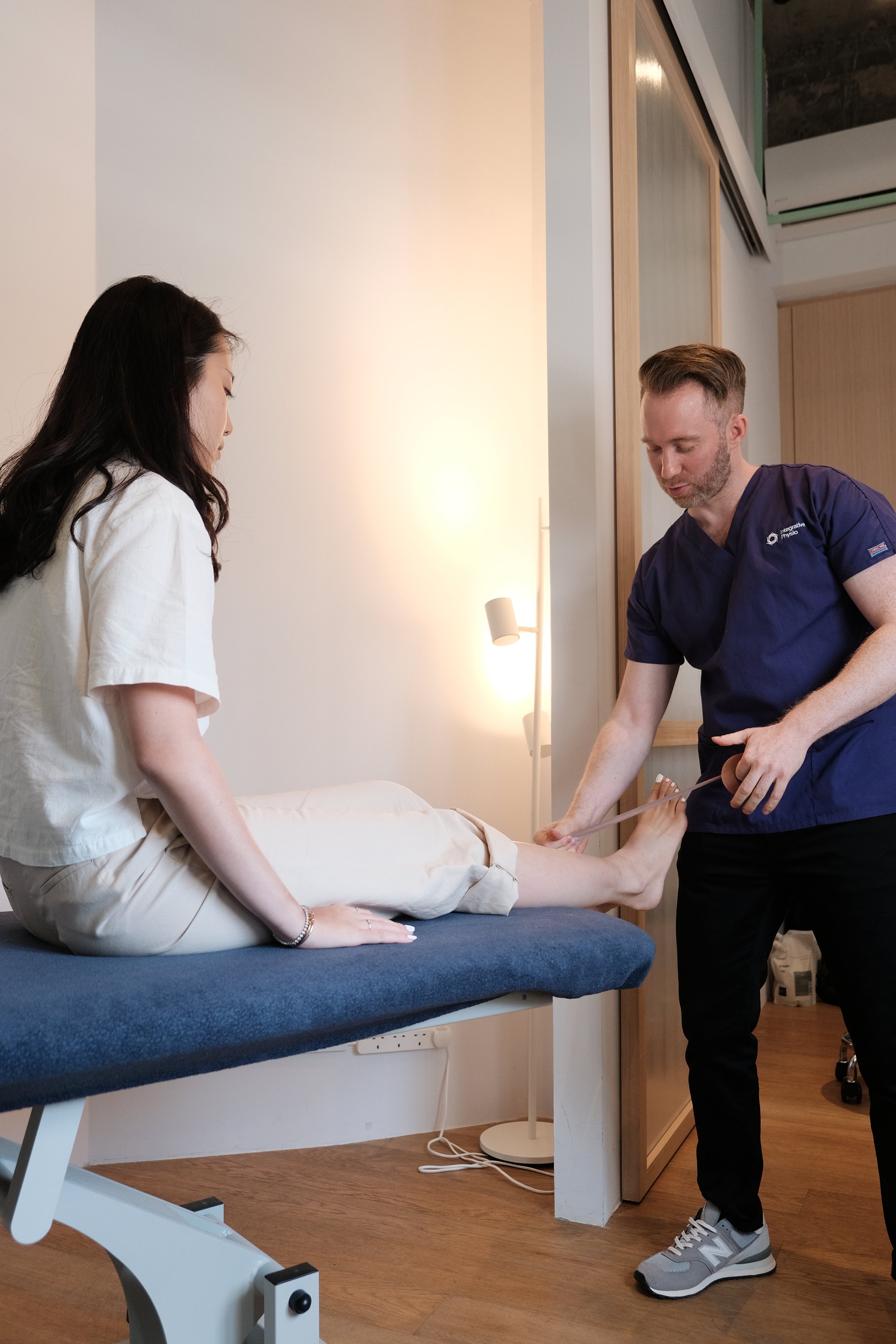
A first visit usually involves a detailed conversation about your injury history, a physical examination of the ankle (including range of motion and ligament stress tests), and balance and strength assessments.
From there, your physiotherapist will likely recommend a tailored programme that may include:
Strengthening exercises for the muscles around your ankle, calves, and hips
Balance and proprioception training, often using wobble boards or single-leg drills
Manual therapy to improve joint mobility
Taping or bracing for short-term support during return to activity
Education on footwear, surfaces, and movement patterns to prevent future sprains
Modern ankle rehab also looks beyond the ankle itself. Strong glutes, a stable core, and good hip control all play a role in keeping your ankle safe, so don't be surprised if your sessions cover more than just your foot.
An ankle that keeps rolling, swelling, or feeling unsteady isn't something you need to live with. These ankle instability symptoms are your body's way of telling you something needs attention, and the longer you wait, the harder it becomes to undo the damage.
Whether you're a weekend runner, a busy parent, an office worker who clocks a lot of steps, or an athlete trying to get back to your sport, a proper assessment can change everything. Most people are surprised at how quickly their confidence and stability return once they start the right rehab programme.
If your ankle has been letting you down lately, that's your sign. Book an appointment with a qualified physiotherapist and take the first step toward an ankle you can actually trust again.