
How to Tape a Sprained Ankle Safely: Physio-Approved Step-by-Step Guide
An ankle sprain is one of the most common injuries treated by physiotherapists worldwide. Whether it happens during sports, exercise, or everyday activities, a sprained ankle can quickly disrupt movement and confidence. Knowing how to strap a sprained ankle correctly can reduce pain, improve stability, and support healing when done safely and at the right stage of recovery.
This physiotherapist-approved guide explains how ankle taping works, when it should be used, and how to tape a sprained ankle safely using methods commonly applied in sports physiotherapy and clinical practice.
Understanding a Sprained Ankle
A sprained ankle occurs when one or more ligaments supporting the ankle joint are overstretched or torn. The most frequently injured ligaments are located on the outside of the ankle and are typically damaged when the foot rolls inward. This mechanism places excessive stress on the lateral ankle ligaments and can result in pain, swelling, bruising, stiffness, and difficulty weight-bearing.
Research shows that early management plays a key role in recovery outcomes. Appropriate compression, protection, and controlled movement can help reduce swelling and prevent long-term instability. This is why external support such as taping or a sprained ankle bandage is often recommended during the recovery process.
Why Taping a Sprained Ankle Is Effective
Ankle taping provides external support to the joint while still allowing functional movement. Unlike rigid immobilisation, taping restricts excessive or unsafe motion while permitting walking and light activity. This balance is important because complete immobilisation may slow recovery and reduce muscle activation around the ankle.
Scientific studies indicate that ankle taping can reduce excessive inversion movement, which is the most common cause of lateral ankle sprains. Taping has also been shown to improve proprioception, which is the body’s ability to sense joint position and movement. Improved proprioception helps reduce the risk of repeated ankle sprains, especially during sports and dynamic activities.
It is important to note that taping should support recovery, not replace rehabilitation. Strengthening exercises, balance training, and progressive loading are essential components of long-term ankle health.
When to Strap a Sprained Ankle
Timing matters when learning how to strap a sprained ankle. During the first 24 to 72 hours after injury, swelling is often significant and may fluctuate. In this acute phase, using a sprained ankle bandage is usually more appropriate as it allows adjustable compression and easier swelling management.
Taping becomes more suitable once swelling begins to settle and weight-bearing is more comfortable. Applying tape too early can reduce circulation or become ineffective as swelling changes. If there is severe pain, inability to bear weight, or concern about fracture, medical assessment should always come first.
What You Need Before You Start Taping
To tape a sprained ankle safely, you will need rigid sports tape such as zinc oxide tape, scissors, and optional underwrap to protect the skin. The ankle should be clean and dry before taping begins. Most importantly, the foot should be positioned at a 90 degree angle. This neutral position allows the tape to support natural ankle mechanics rather than forcing the joint into an unsafe alignment.
How to Tape a Sprained Ankle Safely
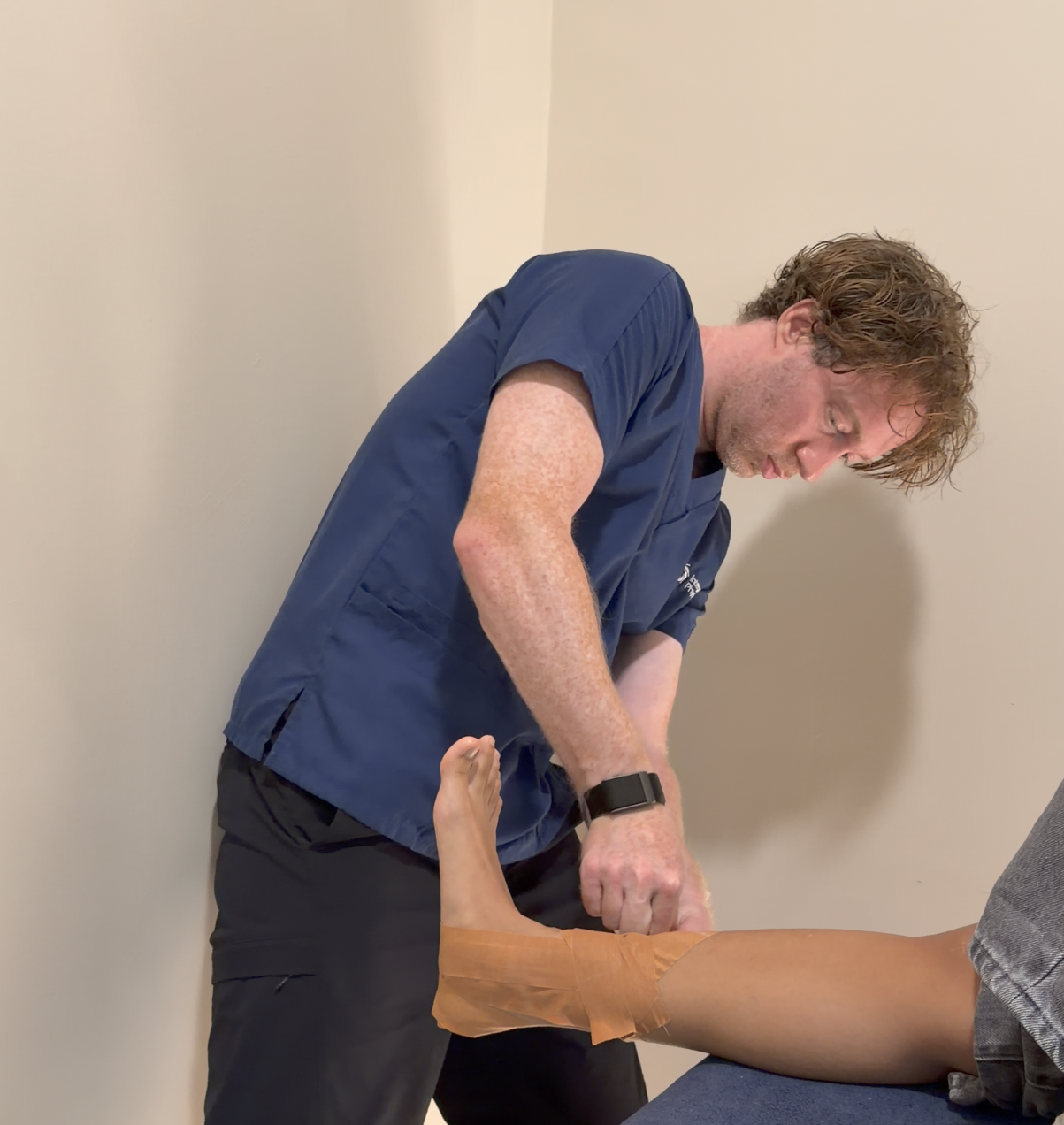
The taping process follows a structured sequence designed to improve stability while maintaining comfort. Begin by applying underwrap if needed, especially for sensitive skin. This reduces irritation and makes tape removal easier.
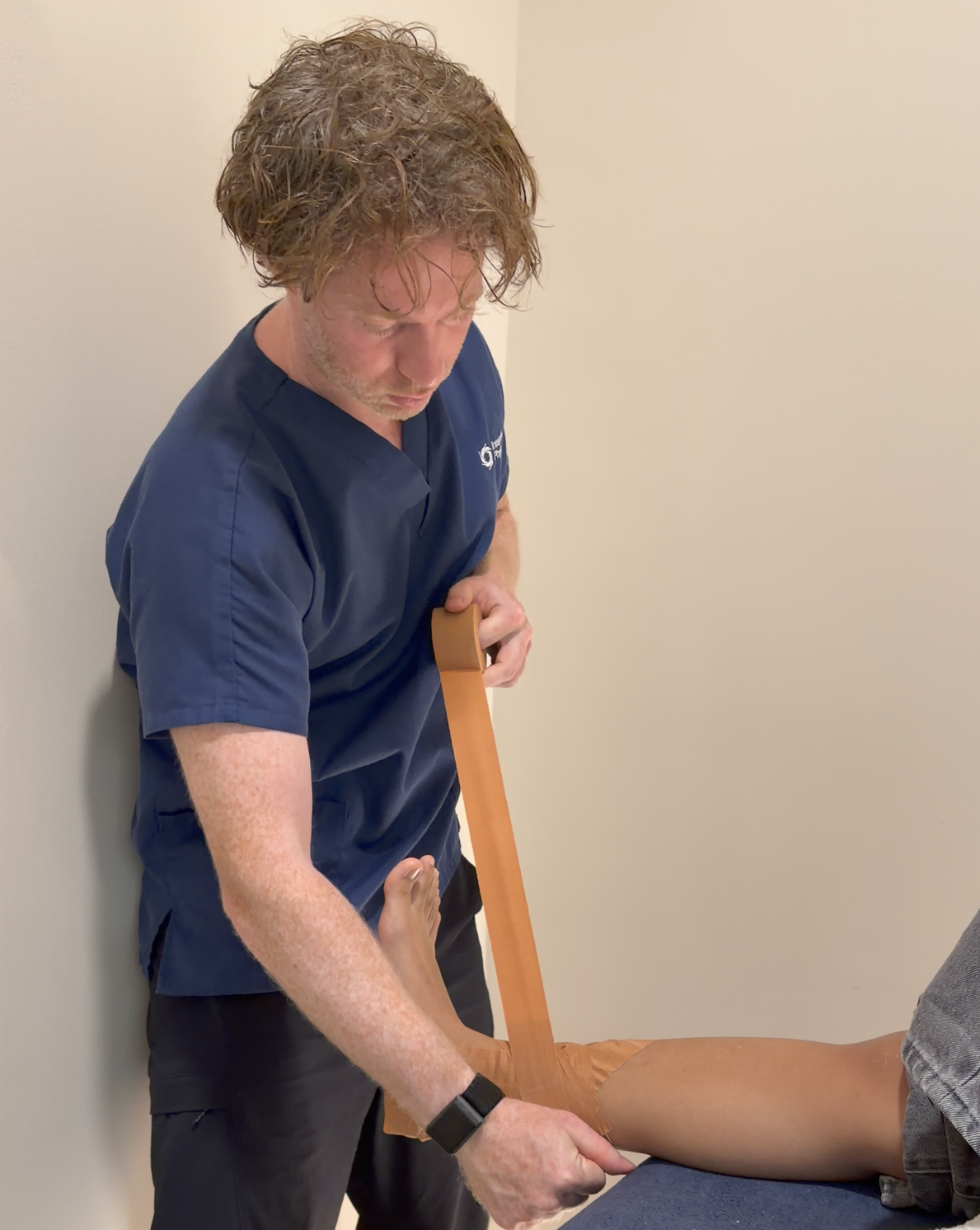
Anchor strips are applied first. One anchor is placed around the lower leg just above the ankle joint, and another around the midfoot in front of the heel. These anchors create a stable base for the supportive tape layers.
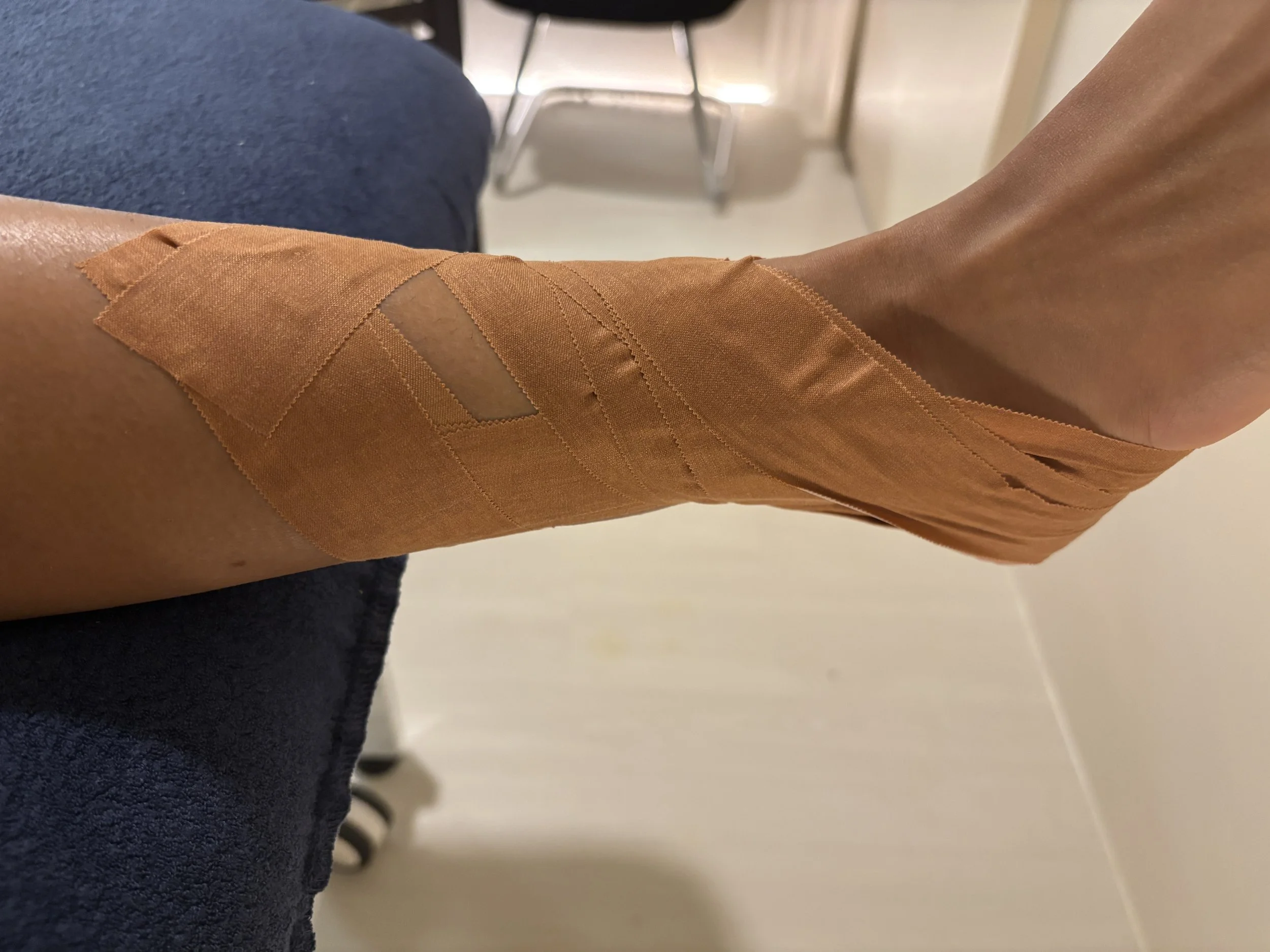
Next, stirrup strips are applied. These strips run from the inside of the ankle, underneath the heel, and up to the outside of the ankle. This direction directly resists inward rolling of the foot, which is the most common cause of ankle sprains. Two to three overlapping stirrup strips are typically used to provide adequate support.
Heel locks are then added to improve rotational control. These wraps loop around the heel and cross over the top of the foot, helping to stabilise the ankle during walking and directional changes.
The taping is completed with figure eight wraps that connect the foot and ankle into a single supportive unit. These final strips help secure all layers evenly and improve overall stability. The tape should feel firm but comfortable. There should be no numbness, tingling, or colour change in the toes.
If you are searching for how to tape a sprained ankle, this method reflects a commonly used functional taping approach where stability is prioritised without fully restricting movement.
Sprained Ankle Bandage vs Taping
A sprained ankle bandage and ankle taping serve different roles during recovery. Bandages are ideal in the early stages to manage swelling and provide light compression. They are easy to adjust and suitable for rest and short periods of walking.
Taping offers greater mechanical support and is more appropriate during activity once swelling has reduced. Many physiotherapists recommend transitioning from a bandage to taping as recovery progresses, particularly when returning to exercise or sport.
Using both methods at different stages often leads to better outcomes than relying on only one approach.
Common Mistakes When Taping a Sprained Ankle
One of the most common mistakes is applying tape too tightly. Excessive compression can restrict blood flow and increase discomfort. Another common issue is using tape as a substitute for rehabilitation. While taping can provide short-term support, it does not restore strength, mobility, or balance.
Incorrect foot positioning during taping or skipping key stabilising strips can also reduce effectiveness. If pain or instability persists despite proper taping, professional assessment is recommended.
How Long Should You Continue Taping
Taping is usually recommended during the subacute phase of recovery and during higher-risk activities for several weeks following an ankle sprain. As strength and balance improve, reliance on tape should gradually decrease. Long-term use without rehabilitation may delay full recovery.
Evidence consistently shows that progressive strengthening and balance training are critical for preventing recurrent ankle sprains, particularly in physically active individuals.
The Role of Physiotherapy in Ankle Sprain Recovery
While learning how to strap a sprained ankle is useful, optimal recovery often requires professional guidance. A physiotherapist can assess ligament injury severity, joint mobility, strength deficits, and movement patterns to guide rehabilitation safely.
If you are seeking professional care, working with a Sports physiotherapist Singapore can help ensure a safe return to activity. Visiting a trusted Physiotherapy clinic in Singapore allows for individualised treatment plans, guided exercise progression, and education on when external support is no longer needed.
Understanding how to tape a sprained ankle correctly can significantly improve comfort, stability, and confidence during recovery. When applied properly and at the right stage, taping supports healing ligaments and reduces the risk of further injury. However, taping should always be combined with rehabilitation exercises and professional advice where needed.
Mastering how to strap a sprained ankle is a valuable skill, but long-term ankle health depends on restoring strength, balance, and movement control rather than relying on tape alone.
Studies:
Kaminski, T. W., Hertel, J., Amendola, N., et al. (2013). National Athletic Trainers’ Association position statement: Conservative management and prevention of ankle sprains in athletes. Journal of Athletic Training, 48(4), 528–545.
Available from: https://nata.kglmeridian.com/view/journals/attr/51/4/article-p283.xmlKerkhoffs, G. M. M. J., Rowe, B. H., Assendelft, W. J. J., Kelly, K., Struijs, P. A. A., & van Dijk, C. N. (2002). Immobilisation and functional treatment for acute lateral ankle ligament injuries in adults. Cochrane Database of Systematic Reviews.
Available from: https://pmc.ncbi.nlm.nih.gov/articles/PMC164375/Vuurberg, G., Hoorntje, A., Wink, L. M., et al. (2018). Diagnosis, treatment and prevention of ankle sprains: An evidence-based clinical guideline. British Journal of Sports Medicine, 52(15), 956.
Available from: https://pmc.ncbi.nlm.nih.gov/articles/PMC385268/Fong, D. T. P., Hong, Y., Chan, L. K., Yung, P. S. H., & Chan, K. M. (2007). A systematic review on ankle injury and ankle sprain in sports. Sports Medicine, 37(1), 73–94.
Referenced in: American Academy of Family Physicians clinical review
Available from: https://www.aafp.org/pubs/afp/issues/2012/0615/p1170.htmlMagee, D. J., Zachazewski, J. E., & Quillen, W. S. (2023). Pathology and Intervention in Musculoskeletal Rehabilitation. Elsevier.
Available from: https://books.google.nl/books?hl=en&id=0LqGEQAAQBAJ